Grandma & Grandpa's Farm
Showing posts with label Landscaping. Show all posts

Monday, September 29, 2008

Going the Extra Mile - Accessible Often Means Roundabout

The Long Way Around

While sometimes a person might complain when there are no accessible facilities available, it can seem like you are looking a gift horse in the mouth with you complain about the facilities that exist. It can be rough to miss a connection on a bus because you were taking the extra fifty or even hundred metres required to reach an elevator or ramp.

True, a person might say "you should have started out earlier" which might have some truth to it --  but when connecting from one service to the next, you only have a certain amount of time to travel from one mode to another whether it be from bus to train or train to bus or even bus to bus or train to train. When service is every 3-5 minutes it is not so bad, but when service is less frequent than every 15 minutes it can make a large difference.

When you can't run for a bus it can be very frustrating for one to leave when you are so very close at hand -- travelling from one place to another within the station or terminal.

Some places just aren't designed well for people who aren't travelling well on foot. It is like the designers don't actually have a clue what it is to use these facilities if you need the accessible facilities. Perhaps this is just the case. Perhaps they really do need people who use the facilities to be a part of the design and not just part of town hall meetings and open houses on getting building permits approved.

(image to right from Wikipedia)

I know that there is the issue of keeping wheelchair friendly ramps at a slope that is safe and without too long straight lengths and such forth. But sometimes thing should be planned out better. I hope that things are getting better. I also hope that there is planning included for (in no particular order and not inclusive) people with babies in strollers and carriages; people with other impairments such as visual; people with luggage; people with small children; and so many other situations other than a business person on the way to work with a brief case and maybe an umbrella... for that matter... rainy days can sure be a problem with people not having a thing they can do with a wet umbrella.

An example of bad design is a "Skytrain" station built in the late 80's or early 90's which straddles a major highway interchange and bridge entrance ramp system. The station does have escalators and an elevator to take people up to the elevated track level -- but -- the elevator is on the side of the highway interchange the "Park & Ride" is on while the Transit Loop for catching buses is on the far side. The work-around is to call for a "Handi-dart" bus to come and transfer you from one side of the interchange to the other. Handi-dart is the part of the local transit system that picks up disabled people who are typically unable to ride normal public transit.

The station should have had an elevator designed into both sides. It is not a matter of there not being room. It might have meant a couple fewer parking stalls in the design of the "Park & Ride". I guess nobody on the design team considered that a person who would require the elevator might be taking the bus to continue their journey? It is good that the stations can be built elevated so that they can be above roads and thus make a smaller footprint on the urban groundspace -- But the disabled are often the folk on the low incomes that use the transit system most... perhaps not in a wheelchair, but sometimes a person who gets around with a cane or walking stick has problems with stairs and escalators?

We need more than work-arounds!

Later!
~ Darrell

142.


DailyStrength - Free Online Support Groups

Friday, September 19, 2008

Grumpy Old Man -- Bush Administration: Sometimes they are more than just Shrubbery.

What does it mean when 40-year-old rhododendrons are butchered?
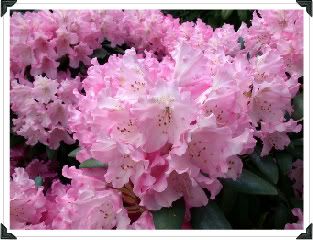
I am sure that many people will read a floral word like rhododendron and think "flower" and "decoration" but perhaps others will realize that they can grow to a large size and ripe old age. Rhododendrons¹ are broad leafed evergreen plants which bloom once a year in the Spring and can be simply covered with colour at that time. They are every bit as beautiful as blossoming cherry trees or apple trees. I think that many might think of them as the small shrubs they have in their flowerbeds and gardens, but they can grow to large sizes when they mature.

(image to left from Image*After)

I am not botanist nor horticulturist and my knowledge of plants -- whether flowering plants or trees -- is not vast, but I know a little and I appreciate heritage and beauty and the world that I live in. I also understand necessity -- but it doesn't stop my heart from breaking when I see something destroyed that might never be replaced and which provided beauty to a neighbourhood.

There were four mature rhododendrons thriving in front of our apartment building two days ago -- now there are none.

Yesterday I looked out my window and saw a small excavator working behind the building and wondered what was up. Were they going to replace some part of the retaining wall for the parking basement? Was there some landscaping need or were they going to improve the stairs leading from the back exit to the parking? Perhaps provide a walk from the front of the building to the back between our property and the house next door so people wouldn't be hopping fences and crossing between the buildings anyway.

(image to right from Image*After)

I became a bit concerned when they started putting up the modular construction fencing along the lane behind our building... this was serious. This was especially so when I noted they were going to put the fencing across the parking entrance to our building. That entrance is also the access to our building for anyone in a wheelchair or mobility scooter.² I went down and spoke to the fellows from the fence rental and they referred me to the contractor who I spoke with.

I found out from the contractor that they were going to be repairing or replacing the storm water drainage piping around the building and would have to be fencing off areas because they would have to be digging around the whole foundation and across the driveway. There is a narrow opportunity -- apparently -- because it has to be done after Summer and before the Fall and Winter rains.

Fair enough... some things have to be done and there are sometimes inconveniences that go along with them. I realized that likely there would be more excavators and even jackhammers and probably afterwards there would be the smells of paving for a while in the parking area that our balcony and windows overlook.

I nearly cried when I watched them carrying away the ruins of one of  the rhododendrons though.

(image to left of Rhododendron macrophylium from Wikipedia)

I am fairly certain they were a part of the building's original landscaping. This building, in its early days -- I believe in the early 1970's -- won awards for its landscaping and appearance. The rhododendrons stood 4.5 - 6 metres tall (15 - 16 feet) and must have been nearly 30 centimetres (1 foot) in diameter at the base of their trunks. There were two red flowering ones and two white flowering ones. The 4 bushes... trees? ...were wide enough that they spanned the width of the end of the building to either side of the entrance, framing it and helping to define the image of the building. Now the building looks naked.

(image to right from BelleWood-Gardens³)

I think with the rhodos the building looked as nice as any newer building, but without, it is just a box. The building was designed to have the landscaping -- it is plain to see -- as the stucco and siding only reach to within 10 feet of the ground leaving a broad band of bare concrete visible.

I have this sad feeling that the landscaping won't be replaced. Perhaps grass will be seeded rather than just letting the weeds move in and mowing them. But... the building just isn't being kept up by the current owners. It is no small wonder that they have problems finding good tenants for the building. But that is being cynical...

(image to left from BelleWood-Gardens³)

How does one replace 40-year-old rhododendrons? They bloomed on this street corner for over 35 years. They provided a visual accent to the building that made a big difference and the building really is one of the gateways to the residential district between the busy main street and the nature preserve on the hillside.

Losing them made my heart break even as necessary as it might have been to replace the building drainage... If it were my building, my investment, I would have seen about transplanting the trees somehow to be replaced back where they belong, or perhaps sell them and replace them with something equivalent. I know that the appearance of a building encourages pride in tenants and also draws decent ones when you need to find new ones.

How does one replace 40-year-old rhododendrons?

Later!
~ Darrell

138

__________
¹ Read about Rhododendrons at "Rhododendron Species Botanical Garden"

² I'll write about the accessibility aspects of all this in a later article.

³ "BelleWood-Gardens"  Garden Diary - May 2007; http://www.bellewood-gardens.com/05-2007.html


DailyStrength - Free Online Support Groups