Grandma & Grandpa's Farm
Showing posts with label pride. Show all posts

Tuesday, March 24, 2009

Need or Want :: Necessity or Luxury

When a Cellphone Stops Being a Luxury

There are many times I have heard on "The People's Court" where the judge has said that "a cellphone is a luxury and not a necessity." Now I do know where she is coming from and agree with what Judge Milian is saying. However sometimes we must lift the brush we are painting with and make sure we are not painting too broad a swath.

It might seem strange, but perhaps the truly needy are the ones who need the "luxury" of a cell phone the most?

The people who are homeless and living on the street are people, just like you and me, who have needs and desires — and I am not just speaking of a desire to chatter with someone a block away on a cellphone.

If you are homeless and manage to land an entry-level job, you will hit obstacles because there are no regular ways to contact you. After failing to contact you a number of times through numbers at soup kitchens or shelter switchboards, your employer is likely to label you "unreliable" — costing you that job.

A pay-as-you-go or "no contract" cellphone might not cost very much for an inexpensive model and if you do not use it much, might not cost much to operate each month. But, it does give that important contact number for employers, potential employers, future employers, social agencies, and family to keep in touch with you. Some of this can be very important so that you don't feel like you've fallen off the face of humanity.

Granted when you are on the street and near cashless, your calls on the cellphone are likely to be short and to the point: "Hello...I'm fine...I'll meet you at the coffee shop on first and main in half an hour... see you there, you have my number." A person wants to minimize the minutes on the phone if you watch all the minutes you pay for in advance on the phone. Better to make appointments to talk in person for sure.

(image to right from Computer Finance)

...and then there are emergencies... have you noticed how far and in between the pay phones are now? How many folk would let a homeless person use the phone in their business or their personal cellphone even if they said it was a "911 Emergency"? That phone in the pocket could be a life saver.

So while a cellphone might be a luxury for the working poor who have homes and can afford a home phone, for the homeless... that phone might actually represent their home.

Later!
~ Darrell

160.

__________
"On D.C. Streets, the Cellphone as Lifeline" The Washington Post.

"That Homeless Guy Outside Starbucks? He Probably Has a Cellphone [Cellphones]" 23 Mar 2009 by Gizmodo; Computer Finance.

"Homeless find cell phones no longer a luxury" 23 Mar 2009 CTIA; Smartbrief.

"In America, Even The Homeless Have Cell Phones (Michelle Obama Edition)" 24 Mar 2009 by Nick Gillespie; Reason Magazine, Hit & Run.

"30% to 40% of D.C's homeless use cellphones" 23 Mar 2009 by Conner Flynn; SlipperyBrick.


DailyStrength - Free Online Support Groups


Friday, September 19, 2008

Grumpy Old Man -- Bush Administration: Sometimes they are more than just Shrubbery.

What does it mean when 40-year-old rhododendrons are butchered?

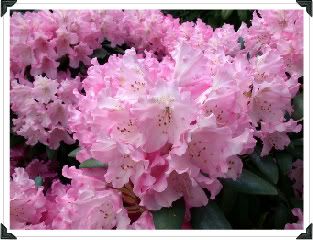
I am sure that many people will read a floral word like rhododendron and think "flower" and "decoration" but perhaps others will realize that they can grow to a large size and ripe old age. Rhododendrons¹ are broad leafed evergreen plants which bloom once a year in the Spring and can be simply covered with colour at that time. They are every bit as beautiful as blossoming cherry trees or apple trees. I think that many might think of them as the small shrubs they have in their flowerbeds and gardens, but they can grow to large sizes when they mature.

(image to left from Image*After)

I am not botanist nor horticulturist and my knowledge of plants -- whether flowering plants or trees -- is not vast, but I know a little and I appreciate heritage and beauty and the world that I live in. I also understand necessity -- but it doesn't stop my heart from breaking when I see something destroyed that might never be replaced and which provided beauty to a neighbourhood.

There were four mature rhododendrons thriving in front of our apartment building two days ago -- now there are none.

Yesterday I looked out my window and saw a small excavator working behind the building and wondered what was up. Were they going to replace some part of the retaining wall for the parking basement? Was there some landscaping need or were they going to improve the stairs leading from the back exit to the parking? Perhaps provide a walk from the front of the building to the back between our property and the house next door so people wouldn't be hopping fences and crossing between the buildings anyway.

(image to right from Image*After)

I became a bit concerned when they started putting up the modular construction fencing along the lane behind our building... this was serious. This was especially so when I noted they were going to put the fencing across the parking entrance to our building. That entrance is also the access to our building for anyone in a wheelchair or mobility scooter.² I went down and spoke to the fellows from the fence rental and they referred me to the contractor who I spoke with.

I found out from the contractor that they were going to be repairing or replacing the storm water drainage piping around the building and would have to be fencing off areas because they would have to be digging around the whole foundation and across the driveway. There is a narrow opportunity -- apparently -- because it has to be done after Summer and before the Fall and Winter rains.

Fair enough... some things have to be done and there are sometimes inconveniences that go along with them. I realized that likely there would be more excavators and even jackhammers and probably afterwards there would be the smells of paving for a while in the parking area that our balcony and windows overlook.

I nearly cried when I watched them carrying away the ruins of one of  the rhododendrons though.

(image to left of Rhododendron macrophylium from Wikipedia)

I am fairly certain they were a part of the building's original landscaping. This building, in its early days -- I believe in the early 1970's -- won awards for its landscaping and appearance. The rhododendrons stood 4.5 - 6 metres tall (15 - 16 feet) and must have been nearly 30 centimetres (1 foot) in diameter at the base of their trunks. There were two red flowering ones and two white flowering ones. The 4 bushes... trees? ...were wide enough that they spanned the width of the end of the building to either side of the entrance, framing it and helping to define the image of the building. Now the building looks naked.

(image to right from BelleWood-Gardens³)

I think with the rhodos the building looked as nice as any newer building, but without, it is just a box. The building was designed to have the landscaping -- it is plain to see -- as the stucco and siding only reach to within 10 feet of the ground leaving a broad band of bare concrete visible.

I have this sad feeling that the landscaping won't be replaced. Perhaps grass will be seeded rather than just letting the weeds move in and mowing them. But... the building just isn't being kept up by the current owners. It is no small wonder that they have problems finding good tenants for the building. But that is being cynical...

(image to left from BelleWood-Gardens³)

How does one replace 40-year-old rhododendrons? They bloomed on this street corner for over 35 years. They provided a visual accent to the building that made a big difference and the building really is one of the gateways to the residential district between the busy main street and the nature preserve on the hillside.

Losing them made my heart break even as necessary as it might have been to replace the building drainage... If it were my building, my investment, I would have seen about transplanting the trees somehow to be replaced back where they belong, or perhaps sell them and replace them with something equivalent. I know that the appearance of a building encourages pride in tenants and also draws decent ones when you need to find new ones.

How does one replace 40-year-old rhododendrons?

Later!
~ Darrell

138

__________
¹ Read about Rhododendrons at "Rhododendron Species Botanical Garden"

² I'll write about the accessibility aspects of all this in a later article.

³ "BelleWood-Gardens"  Garden Diary - May 2007; http://www.bellewood-gardens.com/05-2007.html


DailyStrength - Free Online Support Groups

Tuesday, September 16, 2008

May I Have This Post?

Is Your Post Card Filled?

Value and Romance on a Small Bit of Paper

You see them around all over the place, now mostly in tourist travelled trading places, guest shops, souvenir shops, and landmarks and you might have heard people telling you to send in a card with your name, address and current phone number to various places. (image to right -- image from Image*After¹) Of course you have seen the business reply cards in magazines and as warranty registration cards. Of course I am talking about postcards -- something that has been with us for over a century now. They officially came into being in 1861 -- developed by John P. Charlton from Philadelphia who transferred his copyright to H.L. Lipman -- "Lipman's Postal Card, Patent Applied For". Governments took over, including exclusive right to call them "Postcards" in 1893.

What is the value of a postcard? They are a very simple way to send a message by post for one thing and often they can be sent at a lower price than a regular letter. Today the cost to mail one is not too much different from a letter and of course anyone can read what is written on them. My Mom used to say that the person on vacation sending you a postcard -- or post card -- most often already had returned home by the time it reaches its recipient because each person in the post office who handles it take a moment to read it.

(images above from A Brief History of Post Cards²)

I imagine there are no secrets in a post card... unless you put it into an envelope or parcel or deliver it by hand.

But postcards have something special to them, mailed or not. In picking out a postcard to send someone, you are in a foreign location perhaps, maybe on vacation, maybe on business, but taking a few moments out of your day to think of others. I am getting away from the business sorts, like business reply mail and warranty cards here. They also are something from that place although it is possible to order postcards of exotic locations from the comfort of your home. A person might take their own photographs and write something on the back of them as mementos to send or keep, but still there is an interesting feeling with postcards.

Postcards historically are of values in that they capture a bit of a time and place and sometimes sentiment and feeling of that time. They trace the progress of a community with their snapshots of buildings and roads. Even showing one thing they often show others. A shot of a building might also show cars and people in it and give a glimpse at how they lived. If you look at a postcard from two different periods you might see how telegraph wires were added to be replaced by telephone wires to be replaced by underground wiring.

Postcards could be "wishes" of places a person wanted to visit or things they wanted to purchase or they might be telling of where they finally got or what they got. Businesses have often created PR with postcards and often very artistic ones.

You can find Canada's official Postcard Barrel at the Port Moody Station Museum. Deposit or pick up unstamped postcards during Museum open hours for hand delivery around the world.

Some subjects of postcards: Distant places, Architecture, Vacation Destinations, Advertisements, Street Scenes, Artwork, Landmarks, Cities, Towns, Wars, Heroes, Events,  Politics, Celebrities, and probably other subjects.

Our museum -- The Port Moody Station Museum³ (image to right) -- has a "Postcard Barrel" which is Canada's Official Postcard Barrel! I know there is one on the Galapagos Islands as well. They are an odd sort of thing, you drop a post card into it that you want sent somewhere in the world and people visiting have a look through and pick out ones close to where they are going and hand-deliver them. (see inset left)

You can always send an email, or take a picture to share, or buy postcards to take with you and give to friends -- but to mail it from afar, where it takes on a postal cancellation stamp, and perhaps a local stamp as well, and travel through the postal system until it reaches a friend's home and hand -- that ads something special and romantic to the whole thing. It is a bit more than a photo or a letter. It is a special souvenir not only of a place, but a time and a person.

Later!
~ Darrell

136.

__________
¹ Image*After Unattributed images from Image*After.

² "A Brief History of Postcard Types" Stefano Neis - Yahoo! GeoCities/Heartland/Meadows.

³ "The Port Moody Station Museum" 2734 Murray Street, Port Moody, BC

"Why Use A Postcard" Anders Eriksson - Post Cards usinfo.info

"History of Postcards" Emotions Greeting Cards.


DailyStrength - Free Online Support Groups

Sunday, August 31, 2008

...and I have a dream...

...of when we will no longer hear that someone is the first of their distinct group to overcome a hurdle

Please do not misunderstand, I think it is great that a "black man" is running to be American President -- Barack Obama & Joe Biden. (image to left -- image from CBS News) I think that it is great that a woman has been chosen to be the "running mate" to his opponent. (image to right -- image from post-gazette NOW) It is great that these firsts are happening. I just dream of the day when it will no longer be news that someone is "the first woman to run for an office" or "the first native American to climb Mount Everest."

I look forward to the time when the barriers to people have dropped so much that it will not be out of the ordinary for anyone to take on any job that they are suited for.

When I was young it was odd to be in a Taxi Cab that had a woman driver. When I was a young teen it felt nearly naughty to have a woman barber cutting my hair. Things have changed. Although they attained their position when their party leaders left office, I have lived in a country that had a Woman for Prime Minister -- The Right Honourable Kim Campbell (image to left -- image from The House of Commons Heritage Collection) -- and a province that had a Woman for Premier -- Rita Johnston (image to right -- image from Ministry of Community Services, Province of BC).

I do know there is discrimination still, and more in some places and in some people than others. It is also more in some times and circumstance than others. But I dream when it diminishes more and more.

I think there might always be fear of the unknown. Unknown cultures and unknown religions can bring fear, especially if that fear is fostered by those who wish people to fear newcomers or people who are a little different. But I think this will diminish eventually.

Until then we will still hear of these firsts.

Later!
~ Darrell

129.


DailyStrength - Free Online Support Groups

Saturday, August 2, 2008

Craftsmanship - Still a Great Need

Craftsman vs Worker -- Caring vs A Job

Perhaps a "Skilled Worker" can do as good a job as a "Craftsman" can in many cases and perhaps the difference between "craftsman" and "worker" and "professional" are all semantics, but I am using them in a particular way for the moment and not really talking dictionary or vocabulary here -- so bear with me.

When my Father was buying his second house -- this one custom made to his specifications -- many issues came up that got me thinking about something. The same thoughts came up when my Sister bought her first car and when my Father bought his next house. When someone is making a major purchase of their lifetime doesn't it make you feel a little uncomfortable that the people working on it might just be considering it "another day's work"? In a factory making cars -- a young person's first car is a pretty important purchase to them of their lifetime -- the car is made by many people just putting in their hours. You here jokes that you don't want a car built on a Monday... or a Friday... because the cars would be substandard since the workers would either be tired from their weekend or not have their minds fully on their jobs.

Perhaps on a mass produced consumer product it "might" be acceptable since you can just take the car back and get any problem remedied. I do find that this is almost a bit too routine. I don't know of anyone who doesn't have to take their new car back for some fairly important work when they first buy it -- things that were wrong from the factory.

I understand that a car has many components and many relatively complicated systems. That means many more things that can go wrong. I think that for some reason it might be easier to do quality control on computers which might be more complex -- so the two really aren't comparable, although some might at first think so. Other products you buy are simpler and even if they do turn out defective you can often return them to exchange for one that is in good condition.

I think that when you are buying something like a house, you are seeking a higher degree of quality because you are making one of those lifetime purchases and you can't just take a house back for another. It is also an imposition to have repairmen coming and going for the months following the purchase of your home... It might be for months as well it seems to me.

The time imposition might seem like the big problem, but an equally large problem is that many of the tradesmen who build things for some reason have no concept of how to work in a home that is finished and furnished. That at least is how it seems to me or they would do simple things like wipe their feet or not wear their grubbiest work boots onto new carpeting. Some just seem not to know how to work where there is finished flooring installed and will do things that will gouge floors and stain and tear carpeting. I have seen construction tools tossed into bathtubs and shower stalls as well -- scratching the enamel and other surfaces. The installers of the flooring and plumbing fixtures aren't responsible for that damage, and even if the tradesmen are willing to pay for any damage they do it means that there are more tradesmen coming in to do repairs and more chance for damage being done -- not to mention loss of privacy and the pleasure to enjoy your home.

I wonder how many new home owners throw up their hands and say "enough" and just stop calling the contractors, subcontractors and tradesmen to call back simply because they are tired of these invasions?

It all comes down to the idea of craftsmanship. I think that the difference between craftsmanship and work is that with craftsmanship the worker takes pride in their work and their reputation as a craftsman is important. Their reputation as someone who does quality work is very important and not just that they will come back to fix anything that goes wrong, but a step further -- that things that it is unusual that anything is wrong with their work or will go wrong. A craftsman will not normally let anything that is defective go out of their shop or anything that is likely to go wrong. There are some products that are delicate and then a reputation as being quick to remedy problems is important. That reputation is important in any case even if it is rarely necessary.

I think that fine furniture was once made by craftsmen and that was what was meant. The furniture would not be going out of the factory if blemished or faulty or damaged. It would be made right in the first place. Now it seems to me that factories turn out products that are more likely to be faulty.

A friend once told me what he thought the solution to "automation" was. He said that instead of simply putting in machines and laying off employees, instead increase the productivity, but train the employees and put them in positions that machines can't do. Put them into positions of craftsmen doing hand detailing and hand work. Put them where the work can produce pride and products of value. Add that to the increased productivity and do more with the same number of employees instead of doing the same amount with fewer.

Perhaps that attitude might lead to a surplus of goods... It might be very naive, but I think there probably is something important there. I do think that we do need to train people for those quality craftsman jobs. I think that there is a need for more people for whom their occupation is not just a job, that they are not just workers, but craftsmen.

Later!
~ Darrell

106.


DailyStrength - Free Online Support Groups